> For the complete documentation index, see [llms.txt](https://developers.felt.com/llms.txt). Markdown versions of documentation pages are available by appending `.md` to page URLs; this page is available as [Markdown](https://developers.felt.com/js-sdk/getting-started.md).
# Getting started
The Felt SDK allows you to control your Felt maps and build powerful, interactive custom applications. You can control many aspects of the Felt UI and map contents, as well as receive notifications of events happening in the map such as clicks, selections, and more.
{% hint style="info" %}
Requires the Platform add-on, and included in the free trial. [Extensions](#extensions) require Business or Enterprise instead. See [Plans, access and limits](/plans-access-and-limits.md).
{% endhint %}
See our [examples](/js-sdk/examples.md) page to explore what you can build with the SDK.
There are two main ways to use the Felt SDK:
1. Extensions
2. Embedded maps
### Extensions
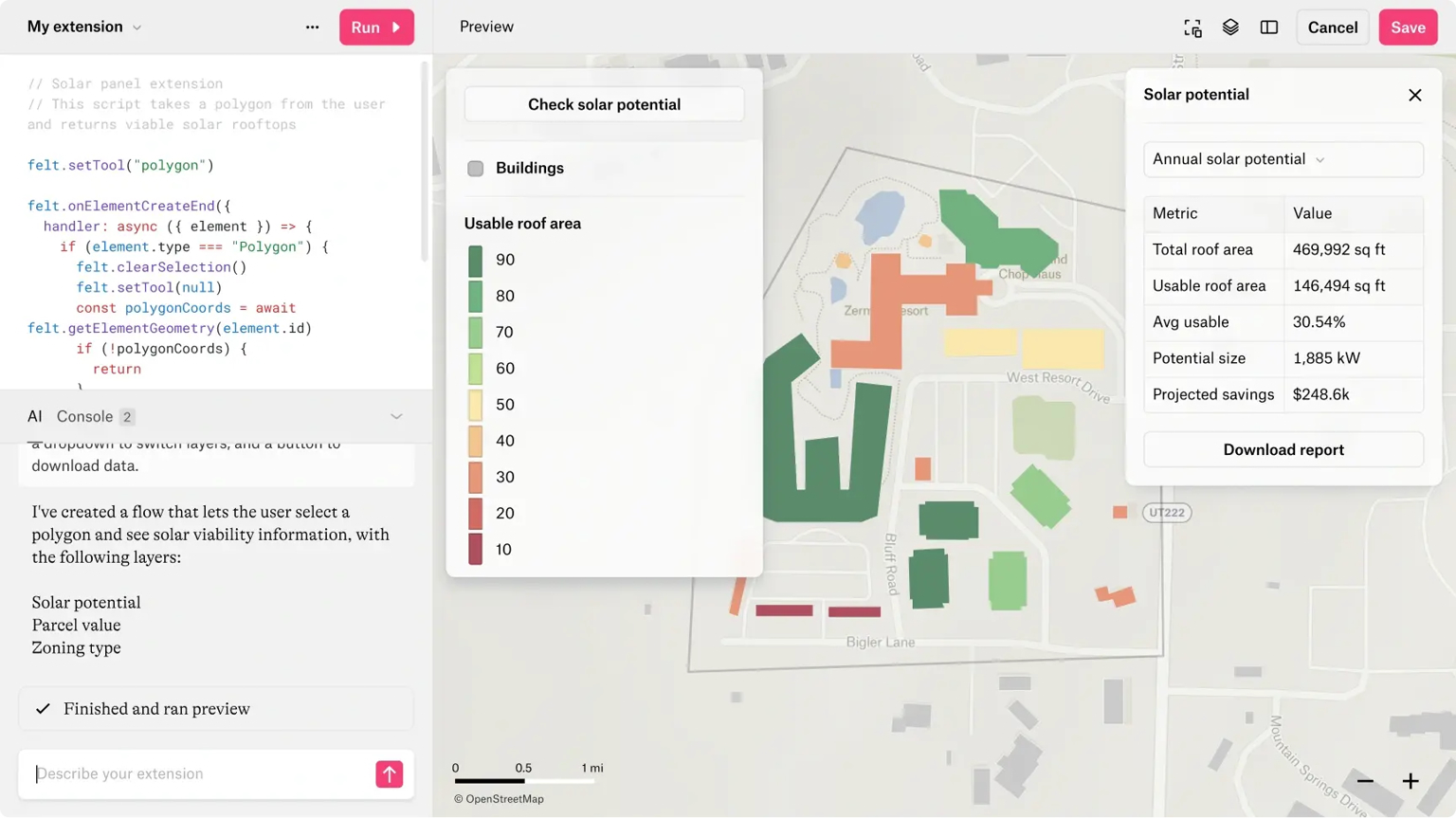
Write code directly within Felt using our [Extensions](https://help.felt.com/dashboards-and-apps/extensions) feature. Extensions run directly within the Felt environment, giving you immediate access to all SDK functionality without embedding or connection steps. They're available on the Business and Enterprise plans.
When creating an extension, you automatically have access to a [`FeltController`](https://developers.felt.com/js-sdk-api-reference/main/feltcontroller) object named `felt` with no setup required. This controller provides all the methods you need to interact with your Felt map, including `getViewport`, `createElement`, `setLayerStyle`, and many more.
```javascript
// In a Felt extension, the controller is automatically available
const layers = await felt.getLayers();
// Listen for map events
felt.onSelectionChange({
handler: ({ selection }) => console.log("Selection changed:", selection),
});
```
### Embedded maps
Embed Felt maps in your own applications and control them remotely. This needs the Platform add-on. To show private maps to your app's users without Felt accounts, see [Authenticated embeds](/js-sdk/authenticated-embeds.md).
#### What you'll need
* A Felt map to embed. Open any map you have access to and grab its ID from the URL: in `felt.com/map/Readable-Title-xPV9BqMuYQxmUraVWy9C89BNA`, the ID is the trailing part, `xPV9BqMuYQxmUraVWy9C89BNA`.
* The map's sharing settings must allow the visitor to view it. Public and unlisted maps work out of the box; for private maps see [Authenticated embeds](/js-sdk/authenticated-embeds.md).
#### Installation
Install the SDK using your preferred package manager:
```bash
npm install @feltmaps/js-sdk
```
Alternatively, load it straight from a CDN in a `